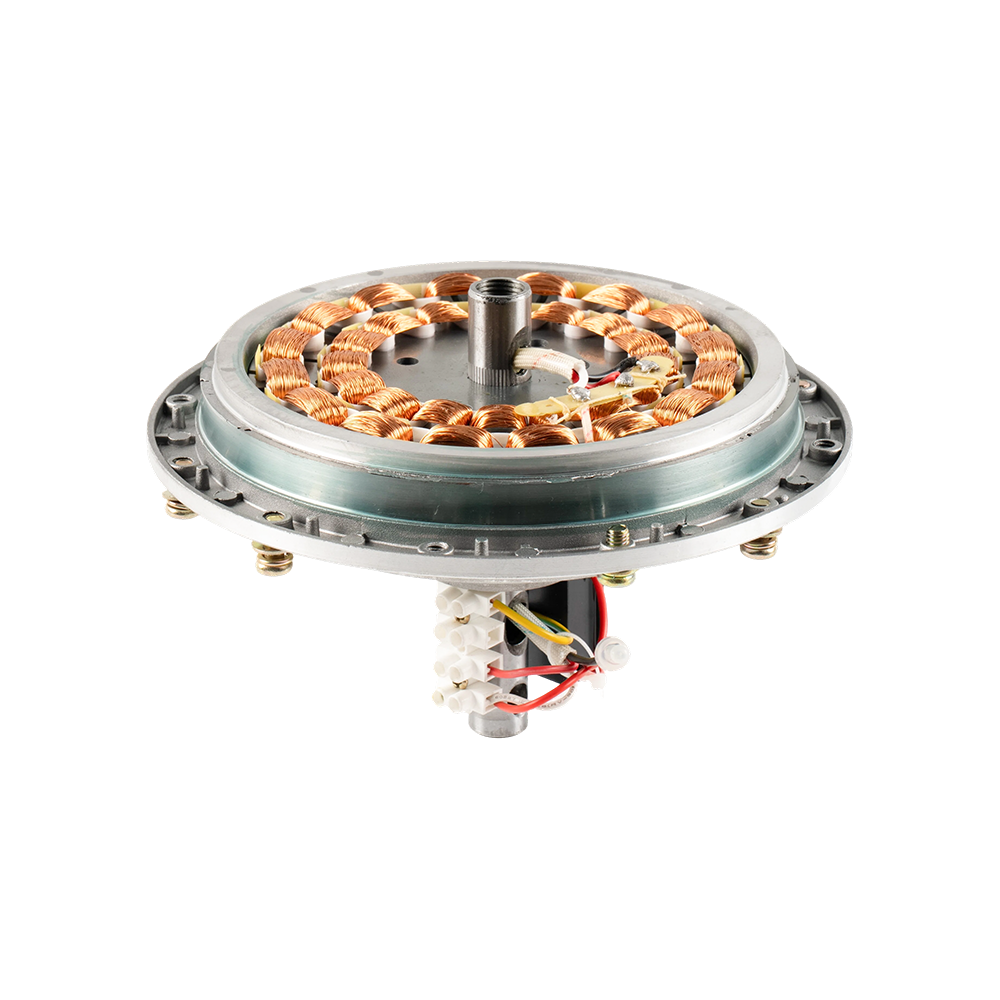
The Ceiling Fan Motor is the core component of a ceiling fan, responsible for driving the fan blades to rotate, facilitating air circulation, and providing cooling or ventilation effects. Ceiling fans are widely used in homes, offices, shops, and industrial environments, especially in hot weather, where they effectively improve air circulation and enhance comfort. The ceiling fan motor ensures long-term, trouble-free operation through its high efficiency, stability, and durability. Modern ceiling fan motors focus on energy efficiency, low noise, and smart features, adapting to various environmental needs and offering a more comfortable and efficient user experience.
Depending on the usage environment and requirements, ceiling fan motors are available in several types, including high-efficiency ceiling fan motors, industrial-grade ceiling fan motors, silent ceiling fan motors, and energy-efficient ceiling fan motors. Each motor design has specific advantages to meet the diverse needs of residential, commercial, and industrial applications.
Ceiling fan motors are characterized by high energy efficiency, low noise, durability, and smart control. They are widely used in home kitchens, offices, commercial spaces, industrial plants, warehouses, and other environments, with particularly widespread use in tropical and warm climates.
Frequently Asked Questions (FAQ)
1. How does a ceiling fan motor work?
The ceiling fan motor drives the fan blades to rotate, generating airflow and pushing air through the room, thereby helping to lower the indoor temperature or improve air circulation, enhancing comfort indoors.
2. How do I choose the right ceiling fan motor?
When selecting a ceiling fan motor, consider factors such as the size of the environment, noise requirements, and energy efficiency. For homes or offices, energy-efficient and silent motors are ideal, while larger commercial spaces or industrial environments may require high-efficiency, powerful motors.
3. Does the ceiling fan motor require regular maintenance?
Yes, the ceiling fan motor needs regular cleaning of the fan blades and the motor casing to prevent dust and grease buildup that could affect the motor’s efficiency. It's also a good idea to check the motor’s connecting parts to ensure everything is functioning properly.
4. How is the ceiling fan motor different from other motors?
Ceiling fan motors are typically designed for high efficiency, low noise, and long-term stable operation. Compared to traditional fan motors, ceiling fan motors are more compact in structure, making them suitable for the unique installation of ceiling fans on the ceiling.


 ENGLISH


 +86-18815287082